
The Secret Ingredient Behind Great eLearning
By Andrea Hinck, Project Manager at Onlea
What does it take to create a powerful digital learning experience?
There are many formats. Yours could could be a scrolling learning module, a series of tutorial videos, an interactive slide deck, even a basic PDF workbook.
Content matters, of course: ensuring that information is accurate and useful, and that it’s presented in a friendly and engaging way.
But the process of development involves much more than that.
Behind every successful eLearning project is strong project management that keeps people, processes, timelines, scope, and expectations aligned.
Connecting Clients and Development Teams
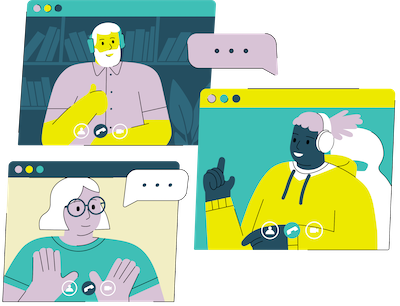
One of the most important roles of a project manager is serving as the communication liaison between different teams. At Onlea, this means keeping information flowing between our client’s subject matter experts and project interest holders, and our own team members contributing strategy, design, or production support.
The project manager makes sure everyone on the Onlea team has a clear understanding of what the client needs. At the same time, they keep the client in the loop, ensuring they are made aware of project challenges, questions receive answers, and appropriate recommendations are offered.
Good communication keeps everyone on the same page, avoids misunderstandings, and helps the decision-making process.
For example, imagine working on an online course that uses animated videos to explain key ideas. Animation cannot begin until the client’s team has provided feedback on the video scripts, but they are over capacity and the review is taking longer than expected.
As a member of the production team, you might start to get pretty frustrated! Timelines are becoming tighter and you’re not yet sure how much they’ll want to change.
Rather than letting the frustration build, the project manager reaches out to their client contact and has an open conversation about what’s getting in the way.
The client lead explains that they’re struggling to coordinate feedback internally: many of their team members are interested in reviewing the scripts, but some are currently away and all have busy schedules. The client lead is unsure if they all need to be involved at this stage or just a few key people.
A perfect place for a project manager to offer support! Using their insight into the development process, the project manager can work with the client to
- Simplify the review process,
- Establish reasonable feedback parameters, and
- Agree on clear deadlines and approval channels.
Removing Roadblocks
Development teams do their best work when they can focus on what they do best: building great learning experiences. As project managers, we help make that possible by identifying and removing roadblocks, coordinating decisions, and making sure the team has the information and resources they need.
Whether it’s clarifying a requirement, following up on missing content, or solving competing priorities, we help keep things moving.
At Onlea, we often have many projects on the go simultaneously. When times are particularly busy, team members may have lots of different demands and struggle to keep them straight or decide which to work on next.
As project managers, we help identify priorities, collaborate with team members, and adjust timelines and deliverables to keep work moving smoothly. By removing competing demands and creating clarity around what needs to happen and when, we help our team stay focused, reduce their stress, and support them in doing their best work.
Creating Capacity
There are also a number of administrative tasks that come with managing an eLearning project:
- Scheduling meetings,
- Tracking action items,
- Documenting decisions,
- Managing deliverables, and
- Coordinating reviews.
By taking care of the details, project managers create more space for everyone to focus on their role and contribute their expertise.

Ultimately, good project management is about more than keeping things on track—it’s about building trust. Open communication helps clients feel heard, supported, and confident that their project is in good hands.
When challenges come up, these strong relationships keep collaboration going, and make it possible not only to reach your goals, but to exceed them.
Want to know more about the different ways Onlea supports organization with learning development and communication projects?